
When it comes to printing marketing materials, stationery and promotional collateral, choosing the right printing method can make a big difference to the final result, turnaround time and overall cost.
Two of the most common printing methods are digital printing and offset printing. While both produce high-quality results, they work in very different ways and are suited to different types of print projects.
So, which one is right for your business? Let’s take a closer look at the differences between digital and offset printing and when you should choose each option.
What is Digital Printing?
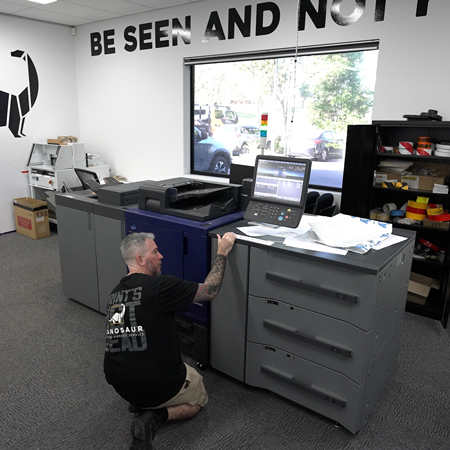
Digital printing is a modern printing method where your artwork is printed directly from a digital file onto the chosen material. Unlike offset printing, it doesn’t require printing plates to be created before production.
This makes digital printing particularly useful for:
- Short print runs – Ideal when you only need a small quantity.
- Fast turnaround – With less setup required, digital printing can often be completed quickly.
- Variable data – Each printed piece can be personalised with different names, images, numbers or other information.
- Cost-effective short runs – You can print what you need without committing to large quantities.
Digital printing is commonly used for business cards, flyers, brochures, posters, invitations, menus and other marketing materials.
What is Offset Printing?
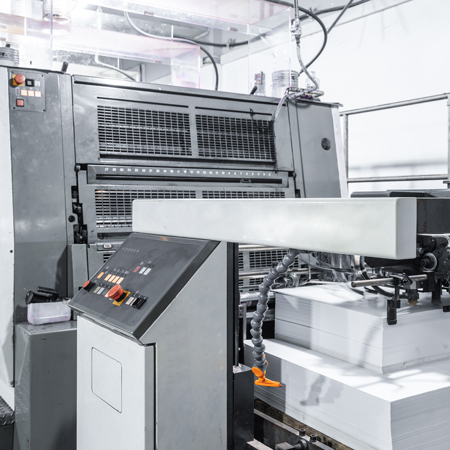
Offset printing is a traditional commercial printing process that uses printing plates to transfer an image onto a rubber blanket before it is applied to the printing surface.
While offset printing requires more setup than digital printing, it can be extremely efficient for larger print runs.
Offset printing is particularly suited to:
- Large quantities – The more you print, the more cost-effective the process can become.
- Consistent colour – Offset printing provides excellent colour consistency across large print runs.
- Special inks – Options such as Pantone and other specialty inks can be used for specific colour requirements.
- High-volume marketing materials – Ideal for businesses producing large quantities of brochures, catalogues, stationery or other collateral.
Digital vs Offset Printing: What’s the Difference?
While both methods can produce excellent results, there are several important differences to consider.
1. Quantity and Cost
One of the biggest factors when choosing between digital and offset printing is how much you need to print and your budget for the project.
Digital printing is generally better suited to smaller quantities because there’s minimal setup involved. You can order exactly what you need without committing to a large print run, making it a cost-effective option for short runs.
Offset printing has higher initial setup costs because printing plates need to be created. However, as the quantity increases, the cost per piece generally decreases, making offset printing more economical for large print runs.
For example, if you only need a few hundred flyers for an upcoming event, digital printing may be the better option. If you’re producing thousands of brochures to use throughout the year, offset printing may provide better value.
The key is to consider both the quantity you need now and how much you are likely to use in the future. Sometimes printing a larger quantity upfront can reduce the cost per item, but only if you have a practical use for the additional stock.
2. Turnaround Time
If you need your printed materials quickly, digital printing can be the better option.
Because there are no printing plates to create and less preparation is required, digital printing can often move from artwork to finished product much faster.
Offset printing involves additional setup and preparation, so it generally takes longer to get started. For larger planned print runs, however, the additional production time can be well worth it.
3. Colour Accuracy
Both digital and offset printing can produce impressive colour results, but they approach colour reproduction differently.
Offset printing is particularly well suited to projects where highly consistent colour reproduction is important, especially across large quantities. It can also utilise Pantone spot colours for specific brand colours.
Digital printing has come a long way in colour accuracy and is an excellent choice for many everyday business printing requirements.
If your brand relies heavily on a specific colour, it’s worth discussing your requirements with your printer before choosing a printing method.
4. Personalisation
This is an area where digital printing has a major advantage.
Digital printing allows for variable data printing, meaning each individual piece can contain different information without requiring a separate print run.

For example, you could produce:
- Personalised direct mail
- Invitations with individual names
- Numbered tickets
- Location-specific marketing materials
- Personalised promotional campaigns
Offset printing is generally better suited to producing the same artwork consistently across a large quantity.


It’s Not Always About Choosing One or the Other
Digital and offset printing aren’t competing solutions where one is always better than the other. They are simply different tools suited to different jobs.
For example, a business may use digital printing for a small run of promotional flyers for an upcoming event, while using offset printing to produce thousands of business cards or brochures that will be used throughout the year.
The most important factors to consider are quantity, budget, turnaround, personalisation, colour requirements and the final application.
Not sure which printing method is right for you? Talk to the Signosaur team and we’ll help you find the right print solution for your quantity, budget and requirements.
FAQs
Is digital printing cheaper than offset printing?
For smaller quantities, digital printing is generally more cost-effective because there is minimal setup involved. For larger quantities, offset printing can offer a lower cost per unit.
Is offset printing better quality than digital printing?
Not necessarily. Both methods can produce high-quality results. Offset printing has advantages for certain colour requirements and large-volume production, while modern digital presses can deliver excellent quality for a wide range of business printing.
What is better for a small print run?
Digital printing is usually the better choice for small print runs because there’s less setup involved and you can print the exact quantity you need.
What is better for printing thousands of copies?
Offset printing is often more economical for large print runs, particularly when the same artwork is being printed in high quantities.
Can digital printing be personalised?
Yes. One of the biggest advantages of digital printing is the ability to personalise individual pieces using variable data, such as names, numbers, images or other information.
Blogs
Signosaur Pty Ltd parent company is now Truepenny Projects Group Pty Ltd trading as Signosaur.


