
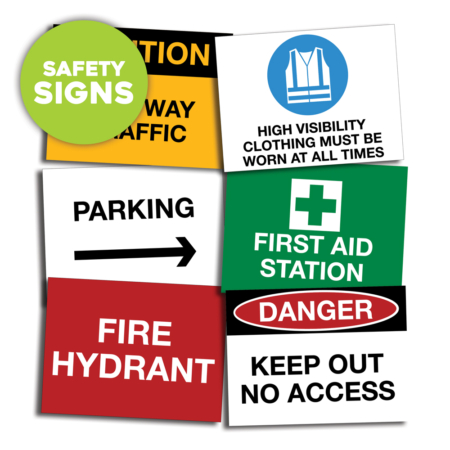
Clear safety signage helps people understand their surroundings, recognise potential hazards and know what action to take. From identifying fire equipment and first-aid facilities to highlighting areas where personal protective equipment (PPE) is required, the right signs help make important information easier to find.
Different workplaces have different needs, depending on their activities, equipment and potential hazards. That’s why it’s important to identify the signs your workplace requires before placing an order.
At Signosaur, we print safety signs for workplaces, alongside warning labels for communicating important information directly on products, equipment and other surfaces. Here’s a closer look at the different options and what to consider when planning your workplace signage.

Start with the right safety signs
Workplaces may need several types of safety signs, depending on their environment and activities. Common categories include:
- Fire safety signs: Help people identify fire equipment and related facilities.
- First-aid signs: Make first-aid kits and facilities easier to locate.
- Emergency exit signs: Help identify designated exits and emergency routes.
- Warning signs: Draw attention to potential hazards that people need to recognise.
- Mandatory signs: Communicate actions that must be followed in a particular area, such as wearing specified PPE.
Each sign should communicate its message clearly. People may need to recognise a symbol or instruction quickly, sometimes while moving through a busy workplace.
Keep the wording concise, use legible text and avoid cluttering the sign with unnecessary information. If you include company branding, make sure it doesn’t distract from the safety message.

Safety signs and warning labels serve different purposes
Safety signs and warning labels both communicate important information, but they can be used in different ways.
Safety signs are generally used to communicate information within a workplace or a particular area. They might identify an emergency facility, highlight a hazard or tell people what precautions to take before entering a space.
Warning labels can be useful when the message needs to appear directly on an item, piece of equipment, container or other surface. For example, a label might identify a potential hazard, remind someone of a precaution or provide an important warning at the point where a person interacts with the item.
The best option depends on what you need to communicate and where people need to see the information.
If you need to display a warning directly on equipment or another surface, take a look at Signosaur’s warning labels.
It’s also worth considering whether you need both. A workplace might use a sign to identify a hazardous area and a label on the relevant equipment to reinforce a specific warning. The messages should work together without becoming confusing or repetitive.
Confirm which signs your workplace requires
There’s no single checklist that suits every workplace. The signs required will depend on factors such as the work being carried out, the hazards present, the workplace layout and the relevant safety requirements.
Before ordering, consult the person responsible for workplace health and safety, your safety adviser or another appropriately qualified professional where needed. They can help identify the signage required for your particular environment.
This is especially important when dealing with emergency information, hazardous substances, machinery or areas requiring specific protective equipment.
Signosaur can print the signs and labels you need once you’ve identified the requirements. However, choosing the correct signs for your workplace is a separate step from ordering them, and purchasing a general selection of safety signs doesn’t automatically mean your workplace meets its obligations.
Place signs where people need the information
Even a well-designed sign won’t help much if it’s difficult to see or positioned away from the hazard or facility it refers to.
Think about where someone will be when they need the information. For example:
- First-aid signs: Position them so people can readily identify the first-aid kit or facility.
- Fire equipment signs: Make relevant equipment easier to locate.
- PPE signs: Display them where people can see the instructions before entering an area or starting a task.
- Warning signs: Place them where people can recognise the hazard and take appropriate precautions.
- Warning labels: Position them on an appropriate surface where the warning is visible at the point of use.
Visibility matters, too. Consider viewing distance, lighting, obstructions and whether the sign or label will remain legible in its intended environment.
Our guide to effective signage placement explores how placement can influence whether signage gets noticed.
Keep safety messaging clear and consistent
Safety signage works best when the message is easy to understand and consistent with the procedures people are expected to follow.
Avoid combining too many instructions on one sign. Keep important symbols and wording prominent, and make sure signs don’t contradict workplace procedures or other safety information.
It’s also worth reviewing your signage when equipment, processes or workplace layouts change. A sign that was appropriate before a change may no longer communicate the right information or direct people to the correct location.
The same applies to warning labels. If equipment is replaced or a process changes, check that any existing labels remain accurate, legible and appropriate for their intended use.

Get your workplace safety signage sorted
Choosing safety signage starts with understanding what your workplace needs to communicate. Safety signs can help people identify facilities, recognise hazards and follow instructions, while warning labels can bring important information directly to equipment, products and other relevant surfaces.
Once you’ve confirmed your requirements, Signosaur can help with the printing. Explore our safety signs and warning labels to find options for your workplace.
FAQs
What safety signs might a workplace need?
Common categories include fire safety, first aid, emergency exits, warnings and mandatory PPE signs. The actual requirements depend on the workplace, its hazards and the applicable safety rules.
What’s the difference between a safety sign and a warning label?
Safety signs often communicate information about an area, facility, hazard or required action. Warning labels can be placed directly on equipment, products, containers or other surfaces to communicate a relevant warning at the point of use.
Can I use warning labels as a replacement for safety signs?
Not necessarily. The two serve different purposes, and a label on a piece of equipment may not replace signage required for an area or workplace. Check the requirements that apply to your situation before deciding which products you need.
Can Signosaur advise which safety signs are mandatory?
Signosaur can print the signs you require, but the signage needed for a particular workplace depends on its circumstances and applicable requirements. Consult the person responsible for workplace safety or an appropriately qualified adviser to confirm your list.
Where should workplace safety signs be positioned?
Place signs where people can see and understand them when the information is needed. Consider the location of the hazard or facility, viewing distance, lighting and potential obstructions. Warning labels should also be visible at the relevant point of use.
When should workplace safety signs and warning labels be reviewed?
Review them when workplace layouts, equipment, processes or hazards change, and whenever a sign or label becomes damaged, difficult to read or potentially inaccurate. Follow any applicable requirements for inspection and replacement.
Blogs
Signosaur Pty Ltd parent company is now Truepenny Projects Group Pty Ltd trading as Signosaur.


