
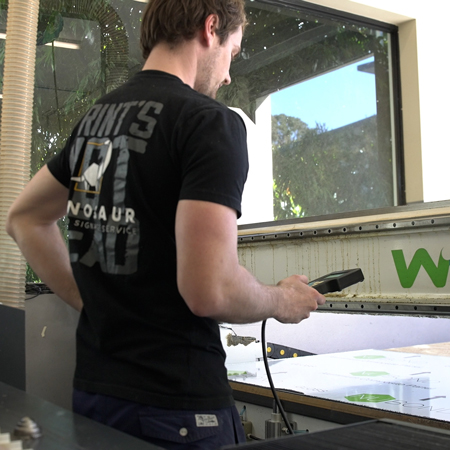
When it comes to modern fabrication and signage, both laser cutting and router cutting are essential tools for producing precise and high-quality designs. While customers don’t always need to choose between them, understanding the differences can help explain how materials are shaped, the level of detail possible, and the ideal applications for each method.
What is Laser Cutting?
Laser cutting uses a highly focused beam of light to cut or engrave materials. The intense energy melts, burns, or vaporises the material, producing a clean and precise edge. Laser cutting is especially effective on thinner materials, acrylics, wood, and metals, allowing for intricate patterns and detailed designs that would be difficult to achieve using other methods.
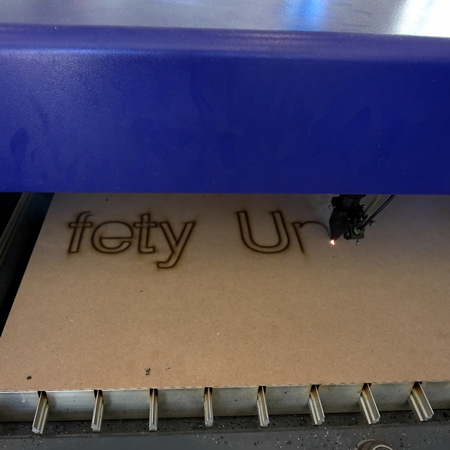
Advantages of Laser Cutting:
- Extremely precise and accurate, ideal for fine details.
- Produces clean, smooth edges without the need for sanding.
- Can cut complex patterns and custom shapes quickly.
- Minimal mechanical contact reduces risk of material damage.
What is Router Cutting?
Router cutting, also called CNC routing, uses a spinning cutting bit to remove material from a solid sheet. Routers are ideal for thicker materials such as timber, MDF, foam PVC, and plastics. Unlike laser cutting, router cutting physically carves through the material, which can leave slightly rougher edges but is excellent for larger, robust pieces and high-volume production.
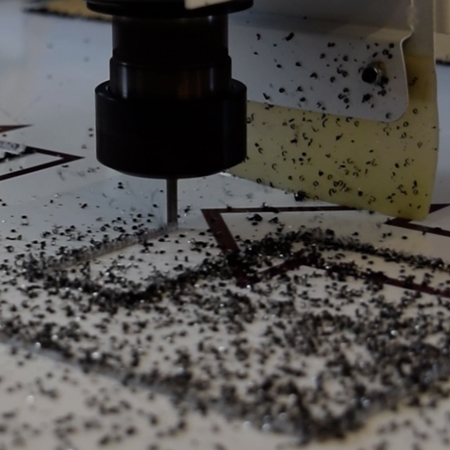
Advantages of Router Cutting:
- Can handle thicker and denser materials.
- Excellent for creating deep cuts, grooves, or 3D shapes.
- More versatile for large-scale projects.
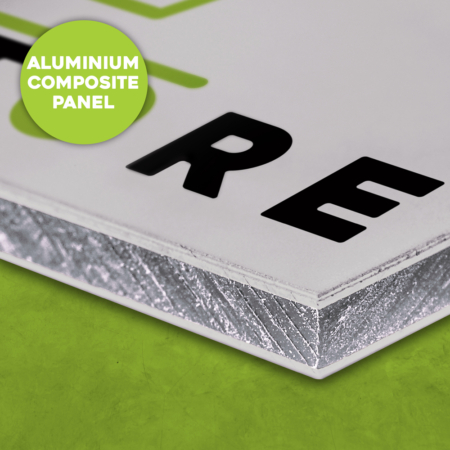
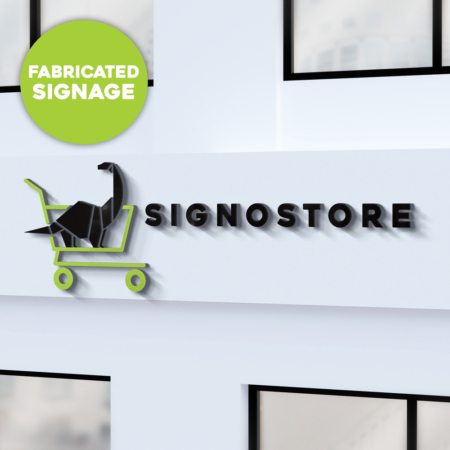


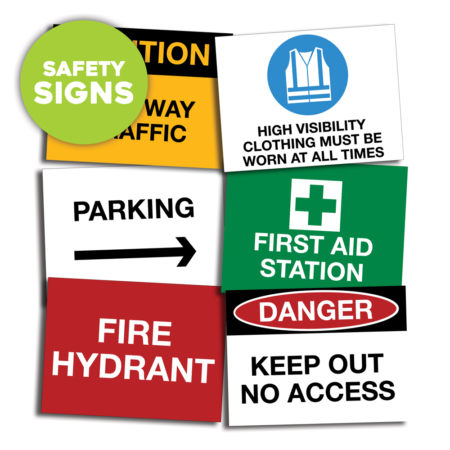
Both methods complement each other in signage, fabrication, and creative industries. Laser cutting is perfect for delicate, precise designs, while router cutting excels for robust and larger pieces. Together, they allow businesses like us to deliver versatile, high-quality signage and custom projects.
FAQs
Which materials work best for laser cutting?
Laser cutting works well on acrylic, wood, thin metals, paper, and plastics. It’s ideal for detailed designs on thinner sheets.
Which materials work best for router cutting?
Router cutting is suitable for thicker materials like MDF, foam PVC, timber, and plastics. It’s perfect for bold shapes and larger signage pieces.
Is one method better than the other?
Not really – they serve different purposes. Laser cutting is best for precision and detail, while router cutting is better for thicker materials and large-scale pieces.
Can laser cutting burn or damage materials?
Laser cutting generates heat, so some materials (like wood or plastics) may char or discolour slightly if not properly managed.
Does Signosaur use both methods?
Yes. Combining laser and router cutting allows for maximum versatility, ensuring high-quality, detailed work on all types of signage and materials.
Blogs
Signosaur Pty Ltd parent company is now Truepenny Projects Group Pty Ltd trading as Signosaur.


